Maria Montessori: A Legacy That
Continues to Shape the World
The name Maria Montessori is familiar to many people, particularly through the educational approach that bears her last name. For some, Montessori represents a philosophy that nurtures independence, confidence, empathy, critical thinking, and a lifelong love of learning. Others associate it with supporting children with additional needs, while many parents simply choose a Montessori school because it is nearby and highly regarded. Whatever draws people to Montessori education, understanding the remarkable woman behind the name offers valuable insight into a movement that continues to influence lives around the world.
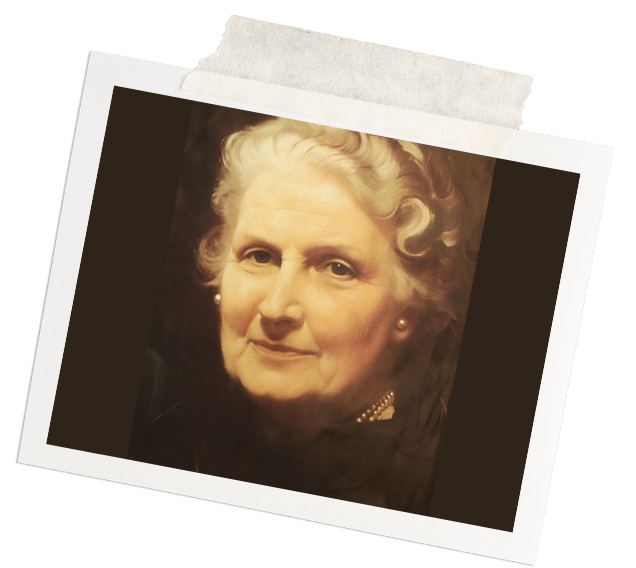
Born in Chiaravalle, Italy, in 1870, Maria Montessori was a pioneer in every sense of the word. In 1896, she became one of the first women in Italy to qualify as a medical doctor, overcoming significant barriers in a society where professional opportunities for women were severely limited. Her determination, intelligence, and resilience enabled her to break through these restrictions and establish herself in a field traditionally dominated by men.
Although trained in medicine, Montessori’s interests extended far beyond healthcare. She was deeply fascinated by education, philosophy, psychology, and anthropology, and she pursued further studies to deepen her understanding of human development. These interests ultimately led her toward the work for which she would become internationally renowned.
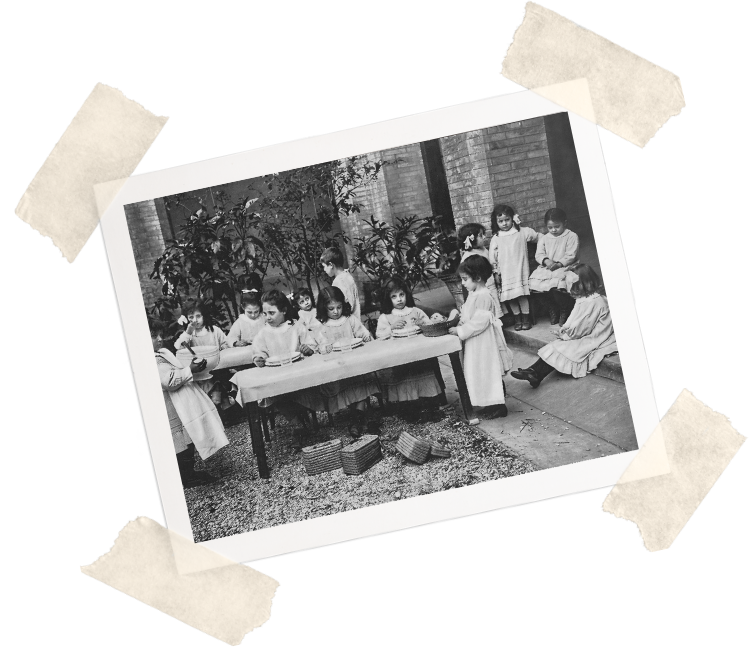
In 1906, Montessori was invited to oversee a group of approximately fifty children living in a housing development in Rome. The project’s sponsors sought a way to occupy the children while construction work was underway. What began as a practical solution soon became a groundbreaking educational experiment. Through careful observation, Montessori noticed remarkable behaviours in the children. Given meaningful activities and a supportive environment, they often chose purposeful work over idle play. They demonstrated concentration, self-discipline, calmness, and consideration for others – qualities that challenged many prevailing assumptions about childhood.
Inspired by these observations, Montessori opened the first Casa dei Bambini (Children’s House) on 6 January 1907. There, she refined the educational principles and practices that would become known as the Montessori Method. Rather than imposing learning upon children, her approach recognised their natural desire to explore, discover, and develop independently. Her work transformed educational thinking and continues to influence teaching practices more than a century later.
Today, the Montessori Method extends far beyond early childhood education. It supports the development of children from birth through adolescence, with programmes designed for ages 0–6, 6–12, and 12–18. Montessori principles are also applied in adult education and professional training.
Beyond the classroom, these principles have found relevance in areas such as sports coaching, dementia care, disability support, and work with individuals who have neurological learning differences.
The reach of Montessori’s legacy can also be seen in numerous social and humanitarian initiatives. Montessori educators work with mothers in prisons, support underserved communities through Educateurs Sans Frontières, and guide parents in applying Montessori principles at home through programmes such as Aid to Life. These initiatives reflect Montessori’s belief that education is not merely preparation for life but a means of transforming society itself.
The Montessori Society is one of many organisations affiliated with the Association Montessori Internationale (AMI), the organisation founded by Dr Montessori to preserve and promote the integrity of her work. Open to anyone interested in learning more about Montessori education, the Society provides opportunities to explore its principles and discover how they can enrich both individual lives and future generations.
More than a century after Maria Montessori began her pioneering work, her vision remains as relevant as ever. Her insights into human development continue to inspire educators, parents, and communities worldwide, demonstrating the enduring power of education to unlock human potential and create a better future.